Emergnc vs Insurcomm: Restoration Services Compared
Table of Contents
Emergnc vs Insurcomm Restoration Services: Quick Comparison
How We Compared These Restoration Services
Emergency Response and 24/7 Availability
The Insurance Claim Restoration Process: Who Manages It Better?
Water Damage Repair Timeline and Mitigation Steps
Cost Transparency and Billing Models
DIY vs. Professional Restoration Risks
Conclusion
Frequently Asked Questions
Last Updated: October 2, 2026
Emergnc vs Insurcomm Restoration Services: Quick Comparison
Choosing between Emergnc and Insurcomm restoration services comes down to one question: do you want a contractor who manages your insurance claim for you, or one who simply performs the repairs? Emergnc and Insurcomm are both established names in property recovery, but they differ in how they handle claims management, communication, and project scope. This comparison breaks down emergency response times, insurance coordination, water damage repair timelines, and billing transparency so you can pick the right partner for your home.
Feature | Emergnc | Insurcomm |
Emergency response | 24/7 mitigation crews | 24/7 emergency mitigation |
Insurance handling | Adjuster coordination | Claims management support |
Service scope | Mitigation and reconstruction | Mitigation and rebuild services |
Billing model | Project-based estimate | Project-based estimate |
Best for | Full-service property recovery | Large-loss commercial work |
That table gives you the short version. The rest of this article explains what actually separates the two, and where a dedicated claim partner changes the outcome.
How We Compared These Restoration Services
We scored both providers on five criteria that matter most to homeowners facing catastrophic loss: emergency response speed, insurance claim restoration process support, water damage repair timeline, cost transparency, and DIY versus professional risk. Each category reflects what restoration contractors actually do on site, not marketing claims. A company that answers the phone at 2 a.m. but leaves you to fight the adjuster alone scores lower than one that handles both. The IICRC restoration standards set the baseline for what counts as proper mitigation and remediation, so we weighted providers that follow those protocols more heavily. Our methodology favors turnkey recovery over piecemeal service, because homeowners juggling a displaced family rarely want to manage three separate contractors.
Emergency Response and 24/7 Availability
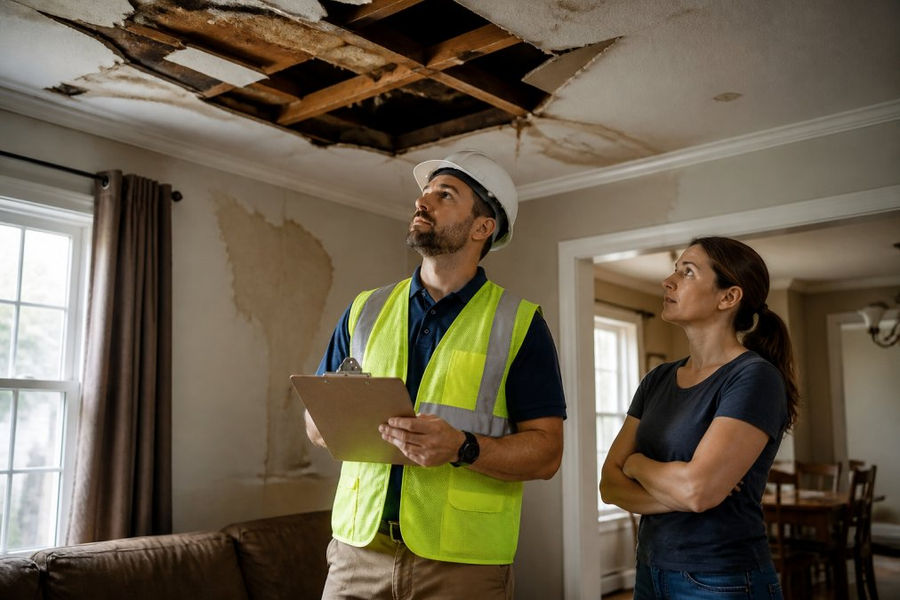
Both Emergnc and Insurcomm advertise 24/7 availability, and both dispatch emergency mitigation crews for water extraction, board-up, and site stabilization. The real difference shows up in the first hour. A fast response limits secondary damage: mold spores colonize wet drywall within a day or two, and structural drying started late rarely saves saturated flooring. When you search for emergency restoration contractors near me, you want a team that arrives with moisture mapping equipment and dehumidification units, not just a promise. Insurcomm leans toward large commercial losses, which can mean residential jobs wait behind bigger accounts. Emergnc positions itself closer to full-service property recovery. Neither guarantees a specific arrival window in writing, so ask for one before you sign.
Watch Out Skipping a documented site assessment to save a day often backfires. Without moisture mapping and a written scope, your insurance adjuster can dispute the claim, and you pay for hidden damage out of pocket.
The Insurance Claim Restoration Process: Who Manages It Better?
The insurance claim restoration process is where these two providers diverge most, and it is also where most homeowners lose money without realizing it. To compare them fairly, you have to understand what actually happens between the first phone call and the final payout.
A property claim moves through a predictable sequence:
First notice of loss. You report the damage to your carrier. The clock on your policy's prompt-notice requirement starts here.
Adjuster inspection and scope of loss. The adjuster documents damaged materials and writes a scope. Most carriers build that scope in estimating software such as Xactimate, which prices line items by ZIP code.
Contractor estimate. The restoration contractor produces its own line-item estimate. If it does not match the adjuster's scope, the difference becomes a negotiation, not a repair.
Approval and depreciation. Carriers typically release actual cash value first, replacement cost minus recoverable depreciation, and hold the depreciation until you prove the work was completed.
Supplements. Damage found after work starts (wet subfloor under intact tile, smoke residue inside a wall cavity) requires a supplemental claim. This is the single most common point where projects stall.
Disputes. If the carrier and contractor cannot agree on scope or price, the policy's appraisal clause or your state's department of insurance complaint process are the usual next steps.
Where Emergnc and Insurcomm sit in that sequence differs in emphasis. Emergnc generally documents the loss, submits a scope, and works alongside your adjuster, you remain the primary point of contact for approvals and questions. Insurcomm's claims management support is oriented toward larger losses, where a dedicated coordinator tracks documentation across a longer project. Neither arrangement is wrong; they simply place the coordination burden in different places.
The practical test is not which company "handles insurance", both do, in some form. It is who owns these four tasks:
Documenting the loss with moisture readings, photographs, and room-by-room notes that survive an adjuster's review.
Building the line-item estimate in the same estimating platform the adjuster uses, so the two documents can be compared line by line.
Filing supplements when hidden damage appears, with photo evidence and a revised scope.
Communicating with the adjuster so you are not the messenger relaying numbers between two parties.
A contractor who does all four is functioning as a claim partner. A contractor who does the first and stops is functioning as a repair vendor. Ask any provider directly: "Who talks to my adjuster, and will you put that in the contract?" The answer tells you which model you are buying.
Watch Out Watch for assignment of benefits (AOB) language. Some restoration contracts transfer your claim rights to the contractor. That can speed repairs, but it also removes you from the negotiation and, in several states, is restricted or requires specific disclosures. Read the contract before signing, and never sign a blank or partially completed work authorization.
One more variable worth checking: whether the contractor will begin emergency mitigation before the claim is approved. Most policies cover reasonable mitigation to prevent further damage, and delaying extraction while waiting on an adjuster is how a manageable loss becomes a mold remediation. Ask what the contractor's policy is on starting mitigation immediately and billing it to the claim.
Rapid Refurb operates as a dedicated claim partner for homeowners in North Carolina, communicating with adjusters to keep repairs approved and moving.
Water Damage Repair Timeline and Mitigation Steps
A typical water damage repair timeline runs from emergency water extraction on day one through structural drying over several days, then repairs and reconstruction. The mitigation steps rarely change between providers: stop the source, extract standing water, map moisture, dry with dehumidification, then rebuild. Where timelines slip is coordination. If the contractor waits on claim approval before ordering materials, weeks disappear.
Cost Transparency and Billing Models
Ask for a line-item estimate, not a lump sum. A single number cannot be compared to anything.
Confirm the pricing platform. If the contractor uses the same estimating software as your carrier, scope disputes shrink dramatically.
Ask what triggers a change order and how it is priced. Get the answer in writing.
Ask who pays for equipment days if drying runs longer than estimated, and whether there is a cap.
Ask about overhead and profit (O&P). On larger losses, carriers often allow a separate O&P line; on smaller ones they may not. Know which applies to you.
Ask whether the estimate includes contents cleaning, pack-out, and storage, which are frequently omitted and then added later.
Pro Tip Request a line-item estimate that mirrors your adjuster's scope before signing anything. When both documents match, supplemental claims for hidden damage are far easier to approve, and you have a written baseline to compare against the final invoice.
For homeowners weighing their options, Rapid Refurb provides licensed and insured services and manages the entire repair project.
DIY vs. Professional Restoration Risks
DIY restoration looks tempting when the damage seems minor, but the risks compound fast. Water you can see is rarely the whole problem: moisture hides behind baseboards, under subfloors, and inside wall cavities where mold spores thrive. Without professional drying equipment, that trapped moisture returns as odor, warped flooring, and structural rot. Fire and smoke damage adds residue that corrodes surfaces and lingers in ductwork.
Conclusion
Property damage rarely waits for a convenient moment, and the contractor you choose shapes how painful the next few months feel. If you want a partner who manages the insurance claim alongside the repairs, Rapid Refurb offers direct adjuster communication, licensed and insured crews, fast response times, and full interior repair and remodeling. Get a quote from Rapid Refurb and let a dedicated claim partner handle the details.
Frequently Asked Questions
What should I look for when hiring emergency restoration contractors near me?
Look for licensing, insurance, and IICRC certification. Check that the contractor offers 24/7 emergency response, provides a written scope of work, and communicates directly with your insurance adjuster. Ask about their experience with similar losses and request references. A dedicated claim partner like Rapid Refurb can handle both the paperwork and the repairs, reducing your stress.
Does my insurance company cover restoration services from specific providers?
Most policies let you choose your own licensed restoration contractor. Your insurer may have a preferred network, but you are not required to use it. Choosing a contractor who understands the insurance claim restoration process, such as Rapid Refurb, ensures claims are documented correctly and approved faster. Always confirm coverage details with your adjuster before work begins.
How do I verify if a restoration company is licensed and insured?
Ask for their license number and certificate of insurance. In North Carolina, you can verify a general contractor's license through the NC Licensing Board for General Contractors. Check that they carry both general liability and workers' compensation coverage. Rapid Refurb is licensed and insured, and provides documentation upon request.
What is the typical water damage repair timeline?
Emergency mitigation starts within hours to prevent further damage. Structural drying typically takes 3-5 days with dehumidification and air movers. Repairs like drywall, flooring, and painting can take one to several weeks depending on the extent. Rapid Refurb provides a clear water damage repair timeline after the initial site assessment, so you know what to expect.
What distinguishes a full-service restoration contractor from a general handyman?
A full-service restoration contractor handles emergency mitigation, structural drying, mold remediation, and reconstruction, often coordinating with your insurance company. A handyman typically lacks the certifications, equipment, and insurance expertise for large losses. For any damage involving water, fire, or mold, choose a licensed restoration contractor like Rapid Refurb to ensure safe and complete property recovery.
Get Quote


Comments