7 Best Dehumidifiers for Basement Water Damage
Last Updated: November 1, 2026
Quick Summary
The best dehumidifiers for basement water damage are 50-pint portable units like the Frigidaire FFAP5034W1 for unfinished basements, or pump-equipped models like the GE ADSE50XWT for hands-off drainage. Always extract standing water first, then run the unit continuously for three to five days with a hose attached.
Cut power to any circuit touching flood water before you step down the stairs.
A dehumidifier pulls moisture from air, not puddles, so extract standing water first.
Prioritize a built-in pump or continuous hose over a tank-only unit after a flood.
Size to the affected area and soaked materials, not the whole basement's square footage.
Plan on three to five days of continuous running and verify with a moisture meter.
Table of Contents
How to Dry Out a Basement After Flooding: The Right Sequence
The best dehumidifiers for basement water damage only work after you remove the standing water and make the space safe. Skip that order and you risk shock, mold, and a unit that runs for days without fixing anything.

Stop the Water and Make the Space Safe
Cut the power to any circuit touching the water before you step down the stairs. The Electrical Safety Foundation guidance on flooded electrical systems is blunt about this: water and live circuits do not mix, and a basement flood is exactly when people get hurt.
Shut off the source if you can find it. Then document everything with photos before you move a single item, because it helps your insurance claim.
Extract, Then Dehumidify
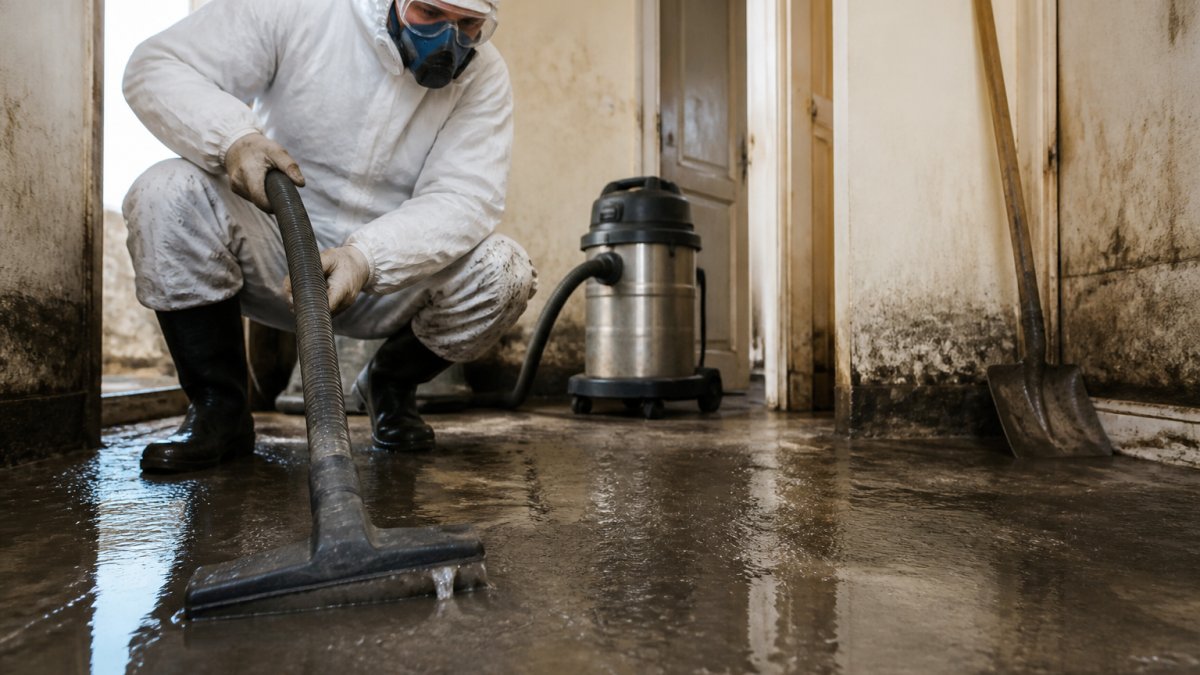
Pump or vacuum out standing water first. A wet/dry vacuum handles shallow pools; a submersible pump handles anything deeper. Only once the floor is damp rather than submerged does a dehumidifier start doing useful work.
A dehumidifier pulls moisture from the air, not from a puddle. Run one over standing water and it fights a losing battle. Pull the bulk water, then let the machine handle the dampness that soaks into concrete, drywall, and framing.
Best Basement Dehumidifiers for Water Damage: Top Picks Compared
The strongest options for basement water damage split into two groups: portable units you can buy and run yourself, and whole-home or restoration-grade units for serious moisture loads. The table below compares the picks on the specs that matter after a flood, pint capacity, stated coverage, drainage method, and price where published.
Model | Type | Pint Capacity | Stated Coverage | Drainage | Notable Feature | Best For |
Frigidaire FFAP5034W1 | Portable | 50-pint class | Large basements | Tank or continuous hose | Top tested pick by RTINGS for large/unfinished basements | Unfinished basements |
Midea Cube MAD50S1QWT | Portable | 50-pint class | Not specified | Tank or continuous hose | Best-tested by Dehumidifier Buyers Guide (50+ units compared) | General basement use |
GE ADSE50XWT | Portable | 50-pint | Up to 5,000 sq ft | Built-in pump (upward drain) | Wi-Fi, ENERGY STAR, $299.00 at Home Depot | Wet rooms needing pump drainage |
AEOCKY 50-pint | Portable | 50-pint | 3,500 sq ft | Continuous drain hose included | Hose drainage out of the box | Flood cleanup with hose drainage |
Shinco 120-Pint | Portable, high capacity | 120-pint | Large basements | Continuous hose | Highest pint capacity in this group | Big, very wet basements |
AlorAir Sentinel HD55 | Restoration-grade | 55-pint class | Not specified | Condensate hose | Affordable flood-cleanup pick per Air Conditioner Lab | Budget restoration work |
AprilAire E050 | Whole-home | 50-pint class | 1,600 sq ft | Permanent condensate line | Basement candidate per Wirecutter | Finished basements |
AprilAire E080 | Whole-home | 80-pint class | 4,400 sq ft | Permanent condensate line | Larger-capacity whole-home unit | Large finished basements |
Frigidaire FFAP5034W1 is a portable option suited to large and unfinished basements, the scenario many flooded basements fall into.
Midea Cube (MAD50S1QWT) is a portable option; lab testing reflects controlled conditions, not a wet, debris-filled basement.
GE ADSE50XWT is a 50-pint portable unit with a built-in pump that can drain upward, so you do not need to haul a tank.
Shinco 120-Pint is a high-capacity portable unit.
AlorAir Sentinel HD55 is a restoration-oriented unit. Restoration-grade units are built for continuous duty and hose drainage, which a multi-day dry-out demands.
AprilAire E050 and E080 are whole-home units rated for 1,600 and 4,400 square feet respectively.
Pro Tip After a flood, prioritize any unit with a built-in pump or a continuous hose over one with only a tank. The first 48 hours produce the most water, and a tank that fills overnight stops drying while you sleep.
Whichever model you choose, match pint capacity and drainage to the damage, not just the square footage on the box.
How to Size a Dehumidifier for the Actual Damage
Most sizing advice stops at square footage. That is the wrong starting point after water damage, because a 1,000-square-foot basement with soaked drywall and carpet carries far more water than the same footprint with a damp concrete floor.
Step 1: Classify the Water and the Affected Area
Before you pick a pint rating, identify what kind of water you are dealing with and how much material it touched:
Clean water (supply-line or rain intrusion): drying is straightforward if you start within 24-48 hours.
Gray water (washing machine, sump backup, aquarium): assume some contamination and wear protective equipment.
Black water (sewage, outdoor flooding): do not run a consumer dehumidifier as your primary response; call a restoration professional, because porous materials usually have to be removed rather than dried.
Then measure the affected area, not the whole basement. A 600-square-foot finished corner with wet drywall is a larger moisture load than a 1,200-square-foot unfinished slab that got a shallow skim of water.
Step 2: Adjust the Pint Rating Upward for Materials
Pint capacity tells you how much water a unit pulls from the air in a day at standard test conditions. Use the box rating as a baseline, then adjust:
Unfinished concrete, standing water removed: a mid-range portable unit in the 50-pint class is usually enough for a single room.
Finished space with drywall and carpet: size up one tier, because porous materials hold water and release it slowly for days.
Soaked framing, insulation, or subfloor: size up and plan on a longer run time; a single portable unit may not keep pace with the release rate.
Multiple rooms or an open floor plan: add capacity or add a second unit rather than moving one unit from room to room.
A common pattern in restoration work is that the dehumidifier is sized correctly for the air but undersized for the materials. When in doubt, add capacity or add air movers, a second unit for a few days costs far less than replacing drywall and flooring.
Step 3: Confirm With Moisture Readings, Not Square Footage
Square footage gets you to a starting pint rating. Measurements tell you whether it is working. Use a pin-type moisture meter on drywall, baseboards, and framing, and a thermo-hygrometer to track relative humidity in the space.
The DOE energy conservation standards for dehumidifiers also explain why ENERGY STAR models cost less to run during a multi-day dry-out, a relevant factor when you may be running the unit around the clock for three to five days or longer.
Key Takeaway Size to the affected area and the materials it soaked, not to the whole basement's square footage. Then verify with a moisture meter and a humidity reading before you decide the unit is big enough.
If the readings will not come down after a full day, the problem is usually one of three things: the unit is undersized, the water source is still active, or moisture is trapped in a cavity the unit cannot reach.
Commercial Dehumidifier for Flood Cleanup: When a Portable Unit Is Not Enough
A commercial dehumidifier for flood cleanup is the right call when a standard portable unit cannot keep up. Signs you have crossed that line: the space stays humid after a full day of running, water has soaked into walls or subfloor, or the affected area is larger than a single room.
Restoration-grade units move more air and pull more water per day than consumer models. When a portable unit is not enough, professional water damage repair is a practical route.
How Long to Run a Dehumidifier After Water Damage
Plan on three to five days of continuous running for a typical flooded basement, and longer if drywall, carpet, or insulation got soaked. The unit should run around the clock, not in short bursts.
Do not judge by feel. A basement can feel dry while framing and subfloor stay damp. Use a moisture meter to confirm readings before you shut the unit down, and keep a log of daily readings so you can prove drying progress.
Dehumidifier vs Air Mover for Water Damage
They do different jobs, and you usually need both. A dehumidifier removes moisture from the air. An air mover pushes air across wet surfaces to speed evaporation, so the dehumidifier has more moisture to pull.
Think of it as a team: air movers lift moisture off surfaces into the air, and the dehumidifier collects it. Run air movers alone and you just circulate damp air.
This is also why household box fans fall short after a flood. They move too little air and cannot reach into wall cavities.
Drying Walls, Flooring, and Hidden Cavities
Hidden cavities are where most basement floods turn into mold problems. Water wicks up drywall, seeps behind baseboards, and pools under flooring, all out of sight of a dehumidifier sitting in the middle of the room.
Three places to check:
Wall cavities: remove baseboards and test the drywall above the waterline with a moisture meter
Subfloor and crawl spaces: soft or bouncy floors signal moisture trapped underneath
Flooring edges: carpet padding and laminate underlayment hold water long after the surface dries
If your home has a crawl space, moisture there can quietly damage subfloors for months.
Get a Professional Moisture Assessment Before You Buy
Before you spend money on equipment, get the moisture mapped. A professional assessment tells you how far the water traveled, which materials are saturated, and whether the damage is beyond a portable unit's reach.
That matters for two reasons. First, it stops you from buying a dehumidifier that is undersized for the actual damage. Second, it gives your insurance claim a documented starting point. If you are still in the first hours of a flood, our step-by-step guide on what to do for water damage covers the immediate actions.
At Rapid Refurb, we are licensed and insured, we communicate directly with adjusters to keep claims moving, and we manage the repair through finished restoration. You get one team accountable for the whole project.
A flooded basement rarely dries as fast as it looks, and the gap between "feels dry" and "is dry" is where mold starts.
Frequently Asked Questions
What type of dehumidifier is best for basement water damage?
A portable or commercial refrigerant dehumidifier rated for the square footage you are drying works best for most flooded basements. Look for a unit with a humidistat, continuous drainage, and enough pint capacity for the moisture load. For large or deeply saturated spaces, a low-temperature or desiccant model holds up better in cold conditions. Whole-home units like the AprilAire E080 suit permanent moisture control rather than emergency drying.
How many pints should a dehumidifier be for a flooded basement?
For active water damage, choose a larger-capacity unit than you would for routine dampness. A 50-pint model such as the GE ADSE50XWT or AEOCKY 50-pint handles moderate rooms, while a 120-pint unit like the Shinco suits large basements. Match pint rating to square footage and how wet the materials are, not just room size, since soaked drywall and carpet add substantial moisture load.
How long should a dehumidifier run after basement water damage?
Plan on running it continuously for at least three to five days, and often longer for deep saturation. Keep it going until a moisture meter reads normal levels in walls and flooring, not just until surfaces feel dry. Empty or drain the tank without long pauses, since stopping too early lets trapped moisture feed mold. If readings stall after a week, call a restoration professional to check concealed cavities.
Should I use a dehumidifier or an air mover after water damage?
Use both, in the right order. An air mover speeds evaporation from surfaces and pushes damp air toward the dehumidifier, but it cannot remove moisture from the air on its own. Run air movers to lift moisture, then let the dehumidifier pull it out. On their own, air movers can raise humidity in a closed basement and spread dampness, so pair them with adequate dehumidification.



Comments