Thanksgiving Kitchen Fire Safety and Smoke Damage Cleanup for Greensboro Homes
Thanksgiving is the one day a year when most kitchens run at full capacity. The oven is on for hours, every burner is going, there's a turkey to baste, a crowd in the house, and plenty of distractions. That combination is exactly why holiday cooking deserves a little extra planning.
This guide covers three things: how to lower the chances of a kitchen fire, what to do in the moment if one starts, and how to deal with the smoke and soot that can linger in your home long after the flames are out.
Before the Big Day: Set Your Kitchen Up for Safety
A little prep the week before goes a long way.
Test your smoke alarms. Press the test button on every alarm, especially the ones closest to the kitchen and near bedrooms. Replace batteries if they chirp or fail the test.
Check your fire extinguisher. Make sure you have one rated for kitchen use, that it's easy to reach (not buried under the sink behind the cleaning supplies), and that the gauge shows it's charged. If you've never read the instructions on the label, take two minutes to do it now.
Clean the oven and stovetop. Grease and food buildup from months of cooking can smoke or ignite once the oven runs hot for hours. A clean oven is a safer oven.
Clear the area around the stove. Move paper towels, dish towels, oven mitts, recipe cards, and packaging away from burners. Loose sleeves and dangling cords are worth watching too.
Plan your turkey method. If you're deep-frying a turkey, do it outdoors, well away from the house, deck, garage, and any overhang. Never fry on a wooden deck or inside a garage. Make sure the bird is fully thawed and dry, and don't overfill the oil. Read and follow the fryer manufacturer's instructions closely.
On Thanksgiving: Habits That Prevent Most Kitchen Fires
Stay in the kitchen when you're frying, boiling, grilling, or broiling. Stovetop cooking is where things go wrong fastest. If you need to step away, even for a minute, turn the burner off.
Set timers for everything in the oven. With several dishes going at once, it's easy to lose track. Use your phone, the oven timer, or a kitchen timer, and check on long-roasting items regularly.
Keep kids and pets out of the cooking zone. A simple rule like "three feet from the stove" helps, especially with hot pans and pot handles. Turn handles inward so nobody bumps them.
Keep a lid nearby. A pan lid or cookie sheet sitting next to the stove is one of the best tools you have for smothering a small grease fire.
If a Small Fire Starts: What to Do
Your safety and your family's safety come first. If a fire is spreading, or you're unsure you can control it, get everyone out and call 911. A house can be repaired; people can't be replaced.
For a small grease fire in a pan:
Turn off the burner if you can do it safely.
Slide a lid or cookie sheet over the pan to cut off oxygen, and leave it covered until the pan has cooled completely.
Never throw water on a grease fire. It can make burning oil splatter and spread the fire.
Don't try to carry a burning pan outside or to the sink.
For a fire inside the oven or microwave:
Turn it off and keep the door closed. That starves the fire of oxygen.
If it doesn't go out quickly, or you see smoke coming from vents or the back of the appliance, get out and call 911.
Once any fire is out, have the appliance checked before you use it again.
After the Fire: Why Smoke Damage Is the Bigger Problem
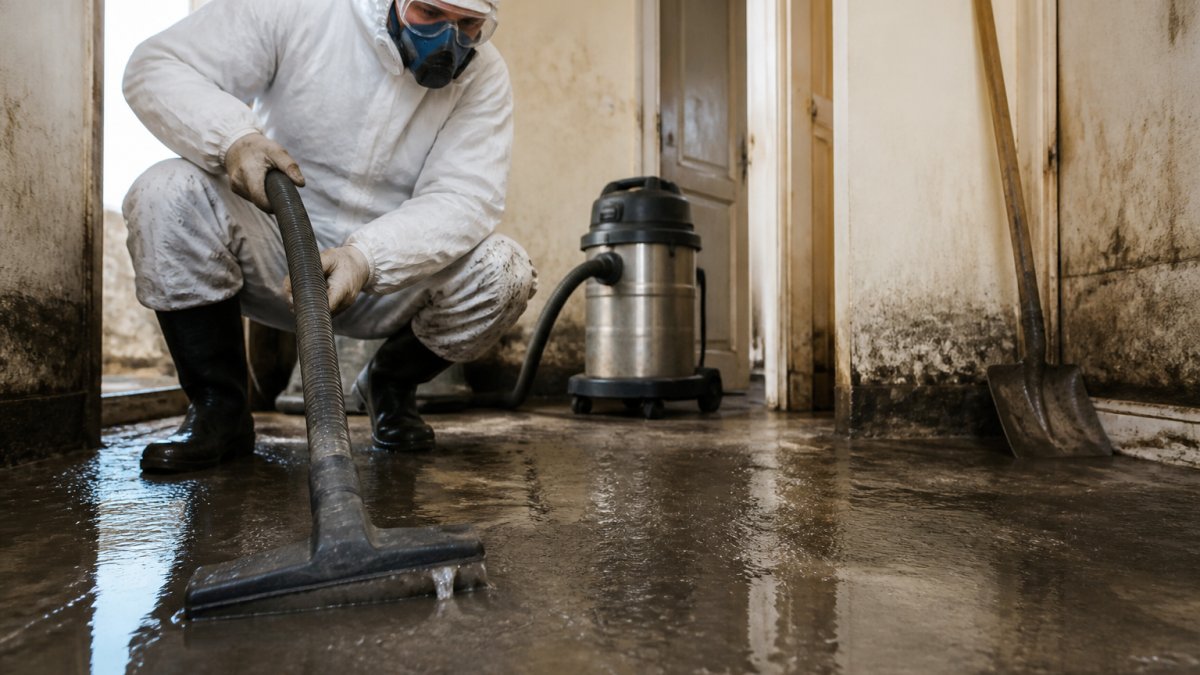
Even a small kitchen fire that's out in seconds can leave behind a surprising mess. Smoke travels well beyond the kitchen. It moves through hallways, into HVAC returns, and settles on walls, ceilings, cabinets, and fabrics in other rooms.
Here's what to watch for:
Soot on surfaces. Soot from cooking fires, especially grease and protein (meat) fires, can leave a sticky, yellowish or brownish film that's hard to see at first. It often shows up on upper cabinets, ceilings, and light fixtures.
Lingering odor. Smoke smell can soak into drywall, insulation, cabinet interiors, carpet, curtains, and upholstery. Airing out the house helps, but deep odors often come back on warm or humid days.
HVAC contamination. If your system was running during the fire, smoke and soot may have been pulled into the ductwork and spread through the house. Replace your air filter and consider having the ducts inspected.
Hidden heat damage. A fire near a wall, range hood, or cabinet can affect what's behind it, including wiring, insulation, and framing.
Cleaning Up: What You Can Do and When to Call a Pro
For very light smoke residue in a small area, start gently. Open windows, run fans to move air outside, change your HVAC filter, and wash fabrics that can go in the laundry. Wipe hard surfaces with a mild cleaner and test any product on a hidden spot first, since some cleaners can smear soot or set stains.
It's time to bring in a professional when:
Soot covers more than a small area or has spread into other rooms.
The smell hasn't faded after a few days of airing out.
Cabinets, countertops, a range hood, or walls are scorched, warped, or discolored.
You suspect damage behind walls or inside the ductwork.
You plan to file an insurance claim.
If you're filing a claim, take photos and video of everything before you clean or throw anything away, keep receipts, and call your insurance company to ask how they want you to proceed. Good documentation makes the process much smoother.
How Rapid Refurb Can Help
Rapid Refurb, LLC helps homeowners in Randleman, Guilford County, and Forsyth County put their homes back together after fire and smoke damage. That includes repairing or rebuilding damaged kitchens, replacing cabinets and countertops, repairing drywall and ceilings, and refinishing so the space looks and smells like home again. We can also help you document the damage and work alongside your insurance adjuster.
If a holiday cooking mishap left you with smoke damage, or you're ready to rebuild a kitchen that's seen better days, we'd be glad to take a look.
Call us at 336-951-8534 or email estimates@igotrefurbed.com to schedule your estimate.
From all of us at Rapid Refurb, have a safe and happy Thanksgiving.


Comments